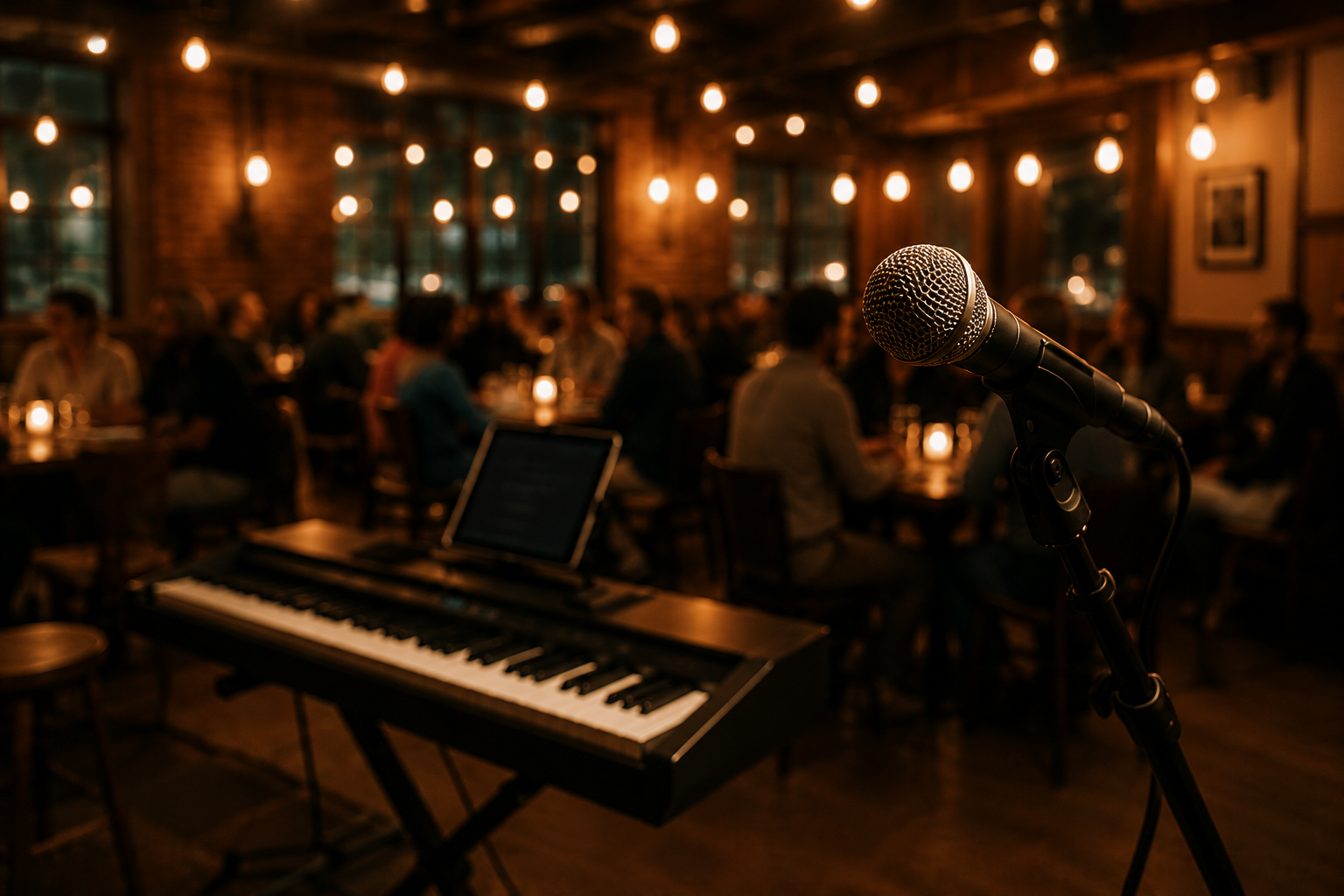
After 15 years away from music, a series of events led me not only back into performing, but back into it in ways I never imagined. Today, I perform throughout Northwest Ohio as part of a cover duo. On any given month, we might play a retirement community, a church service, a golf club, a winery, a restaurant patio, a county fair, a wedding, or a neighborhood bar.
But performing is only one piece of what I do. I also run front-of-house sound for everyone from solo musicians to six-piece bands. My family's business owns a wine café where I book musicians and often run sound there as well. On top of that, another one of my businesses regularly puts me in venues where I experience local music simply as a customer. That combination has given me a perspective I never expected.
I've been the musician hoping the venue appreciates my work. I've been the sound engineer trying to make everyone on stage happy. I've been the venue wondering whether live music is helping or hurting the night's business. And I've been the customer who just wanted to enjoy dinner without shouting across the table. Those perspectives don't always agree.
I've heard musicians say:
"It's not my job to bring people. I'm just here to play music."
I've heard customers say:
"The music is too loud."
I've heard performers ask:
"Can you turn my monitor up? I can't hear myself."
Every one of those viewpoints is understandable. But after seeing this industry from nearly every angle, I've learned something that I think every working musician should understand.
A venue isn't simply paying you to play music. It's investing in an experience.
Remember What the Venue Is Buying
Independent restaurants and entertainment venues have never operated on huge profit margins. Rising food costs, labor costs, utilities, insurance, and other operating expenses have made the business even more challenging. In 2025 alone, more than 9,500 independent restaurants closed across the United States, with full-service restaurants among the hardest hit. Even many successful operators describe the industry as one of constantly balancing rising costs against unpredictable customer traffic.
When a venue hires live music, it isn't simply buying three hours of entertainment. It's making a business decision. If a venue pays me $200 to perform and feeds me dinner afterward, that isn't just a paycheck. It's an investment the venue hopes will improve the entire evening. The goal isn't necessarily that I personally bring enough friends to fill every seat. The goal is that my presence encourages people to stay longer, order another drink, come back next month, or choose this venue over another one in the future. Once you start looking at it that way, your job becomes much bigger than simply playing the right notes.
Promotion Is Part of the Job
One statement I've heard over the years is:
"It's not my job to bring people."
I understand where that mindset comes from. Most local musicians don't have massive followings, and asking your friends and family to come to every show gets old quickly. But promotion isn't only about convincing your cousin to show up. It's about showing the venue that you're invested in the night's success.
Share the event. Mention the venue. Post photos afterward. Tag the business. Thank them publicly. Those things take only a few minutes, but they tell the venue something important:
"This musician wants this night to succeed just as much as we do."
Talent might get you booked the first time. Being a partner is what gets you invited back.
Show Up Ready
Being on time doesn't mean walking through the door ten minutes before your start time. It means arriving early enough to unload, set up calmly, troubleshoot problems, sound check, greet the staff, and still be ready to begin exactly when you're scheduled. Starting late doesn't just affect you. It affects servers, bartenders, kitchen timing, customer expectations, and the overall flow of the evening.
Professional musicians don't rush. They prepare.
Don't Let the Clock Tell You When to Take a Break
This one surprised me after I started looking at shows from the venue's perspective. Imagine you're scheduled from 6:00 to 9:00 p.m. Your routine is simple: play until 7, take a break, play until 8, take another break. Seems reasonable. Now imagine it's 8:00. Only six customers remain. But those six people are completely engaged. They're requesting songs, singing along, ordering another drink, and having a fantastic evening. If you walk off stage because "it's break time," there's a good chance those six people leave too. Suddenly your final set is played for empty chairs. Sometimes reading the room is more important than following your routine.
The venues I've worked with notice those moments.
Give the Venue Something Worth Promoting
Recently I saw a discussion online criticizing venues for using AI-generated promotional graphics. Whether you love AI or hate it isn't really the point. Here's the question I would ask instead: What did you give the venue to work with?
Many musicians haven't updated their promotional photos in years. Others only have dimly lit cell phone pictures from the back of a crowded bar. Meanwhile, the venue is trying to convince people to attend your show. Help them. You don't need an expensive photographer. Most modern smartphones take incredible photos. Find good lighting. Wear what you'd normally wear on stage. Take twenty pictures. Pick the best three. Now every venue that books you has quality images they can use. Good marketing starts with good material.
Remember Why You Were Hired
Of course the music matters. Play well. Keep improving. Learn new songs. Be entertaining. But don't lose sight of the bigger picture. The venue didn't hire you because they wanted background music. They hired you because they believed you could make the entire evening better. Every decision you make—from how you promote the show, to when you take a break, to how you interact with customers and staff—either increases or decreases that value. The musicians who understand that are usually the ones who stay booked.
The best musicians aren't always the ones with the biggest song list or the fastest guitar solos. They're the ones who make the entire night more successful—for the audience, the staff, and the venue.
Let's Be Frank
Being a great musician might get you booked once. Being someone who helps the venue succeed is what gets you invited back.