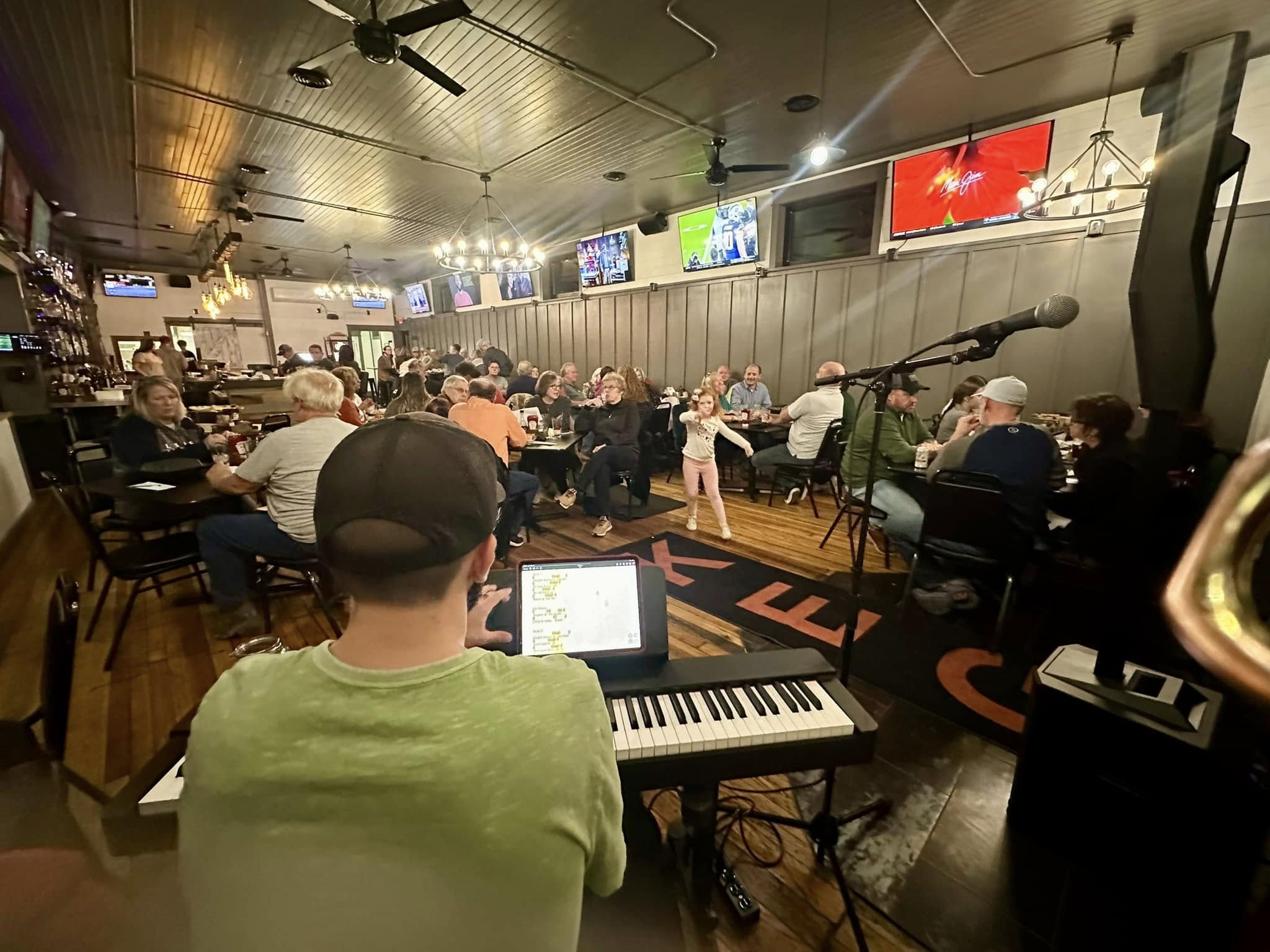
Live music is expensive. That is not a criticism of musicians. We should be paid fairly for what we do. But from the venue side, live music is an investment—and increasingly, venues have to think carefully about whether that investment makes sense.
In my first Field Note, What Venues Actually Want From Musicians, I talked about some of the things we can do as musicians to make ourselves valuable to the places that hire us: promote the show, arrive prepared, start on time, pay attention to breaks, provide venues with good promotional material, and understand that the success of the night matters.
But there's another part of that equation: the show itself. If we want people to keep coming out for live music—and venues to keep paying for it—we need to give them a reason to come back. And I think one of the easiest ways musicians can do that is also one of the most overlooked: stop playing the same show every time.
Put Yourself in the Audience
Imagine you're a customer at a local bar or restaurant. You don't follow the live music calendar particularly closely. You just happen to stop in about once a month. Over six months, you happen to catch the same musician three times.
The first time, you enjoy it. The second time, you start recognizing some of the songs. But by the third time, you realize something: it's the same show. Same songs. Same order. Same stories between songs. Same jokes. Same break at almost exactly the same time. You already know what's coming next.
How engaged are you by that third show? More importantly, when you're deciding where to go next month and you happen to check the live music calendar, what happens when you see that musician's name again? You might think: "I've already seen them." That's a problem—not just for the musician, but for the venue too.
Now Change 10 or 15 Songs
Let's run the exact same scenario again. You see that musician three times over six months, except this time each show is a little different. Maybe 10 or 15 songs change between performances. Maybe they take some requests. Maybe songs you heard the first time disappear entirely from the second show. Then on your third visit, they pull out a song you love that you haven't heard them play before.
Suddenly your reaction changes. "Hey, they didn't play this last time." Now you're paying attention. What else are they going to play tonight? And when you see their name on the calendar next month, instead of thinking "I've already seen them," you might think: "I wonder what they'll do this time." That's the difference I'm chasing.
A Setlist Is a Plan, Not a Contract
I'm not against setlists. Walking into a three-hour gig with absolutely no idea what you're going to play isn't necessarily the answer either. A setlist gives you somewhere to start. But I don't think it should lock you into where the night goes, because you don't really know what kind of show you're playing until you meet the audience.
Maybe you expected a younger crowd and the room ends up mostly 50+. Great. We have songs for that. Maybe you're playing songs that normally get a great response and they're just not connecting that night. Move on. Maybe people start responding particularly well to country. Play some more country. Maybe they're singing along to every upbeat song you play. Follow that energy. The audience is constantly giving you information. The trick is being willing to listen to it.
Sometimes the Audience Writes the Setlist
My duo has a QR code we put out at our shows. Audience members can scan it with their phones, see the songs we have available, and send us requests. At most gigs, we might get a request or two. But one night, something completely different happened: the requests just kept coming. Before long, almost the entire show had become requests. That was absolutely not the set we walked into the venue planning to play. And it was awesome.
The audience was essentially writing the setlist in real time. Why would we fight that? We had a room full of people actively engaged enough with the music to pull out their phones, look through our repertoire, choose what they wanted to hear, and send it to us. At that point, my carefully planned next song doesn't matter very much. Requests are data. If one person requests a song, someone wants to hear that song. If an entire room starts requesting songs, they're telling you what kind of show they want. Give it to them.
Sometimes One Song Changes the Room
We've seen the same thing happen in a different way with Piano Man. There's an interesting perception that sometimes comes with playing piano. People see someone sit down at a keyboard and may expect slow, quiet background music. And sure, piano can absolutely do that. But then you play Piano Man. People recognize it. They start singing. The energy changes. And sometimes you can almost watch the audience realize: "Oh. Piano can be fun."
That's useful information. If Piano Man completely changes the way the room is responding to the piano, maybe that isn't the night to immediately put the guitar back on and follow the setlist we created before the gig. Maybe we stay on piano. Maybe we pull out more recognizable piano songs. Maybe the show takes a direction we didn't expect. That's what reading the room means to me. It isn't some mysterious musician sixth sense. Play something. Watch what happens. Adjust.
But How Do You Have Enough Songs?
This is where I think a lot of musicians hit a wall. My duo has a repertoire of more than 350 songs. Are all 350 appropriate for every gig? Absolutely not. That's actually the point. Having a large repertoire means we have options. If the crowd skews older, we can lean into older material. If people want country, we can go further in that direction. If piano is connecting, I have somewhere to go. If requests start pouring in, there's enough variety for the audience to actually shape the show.
But whenever you talk about having hundreds of songs available, the obvious question is: how can you possibly learn that many songs? Part of the answer is that I stopped believing I needed to recreate every recording.
You're a Cover Band, Not a Tribute Band
This is a mental hurdle I think holds musicians back. If you're playing covers, you're covering the song. You're not necessarily reproducing it. Those are different things.
Does your strumming pattern have to match the record exactly? No. Does the audience care that the original recording uses an Am7 and you played an Am? Probably not. Is the original key uncomfortable for your voice? Change it. Need a capo? Use one. Don't want to reproduce the guitar solo note for note? Make up your own. Don't have an instrument that's important to the original arrangement? Figure out another way to represent the recognizable part. Does the song have an extra verse that makes an already-long song drag in your particular setting? Cut it. And yes, worship musicians, I'm looking at some of you. We don't always need all seven minutes.
The goal is to respect the song and keep the things that make people recognize and love it. After that, make it yours. There is freedom in getting past the idea that a successful cover is measured by how accurately you reproduced the recording. Once you get over that mental hurdle, your potential repertoire gets a whole lot bigger.
Your Audience Probably Isn't Grading You
Musicians hear things differently than most of the audience. We notice the chord we missed. We know the strumming pattern wasn't quite right. We know we shortened the solo. We know the original artist plays the song in a different key. Most people in the room don't.
They're deciding something much simpler: Am I enjoying this? Do I recognize the song? Can I sing along? Does this feel good? Am I having fun? That's the test. I'd rather play a slightly simplified version of a song the room is excited to hear than refuse to play it because I haven't perfected every detail of the original recording. That mindset is a big part of how we've built such a large repertoire—and why we're able to change direction during a show.
Give Them a Reason to Come Back
This all circles back to that customer at the bar. You don't control how often they go out. You don't control which venue they choose. You don't control how much money they have to spend. But you can control what happens when they see you.
If they've seen you before, don't make their previous experience a reason to skip the next one. Give them something different. Change some songs. Take requests. Pay attention to what works. Bring old songs back. Retire others for a while. Try something you're not completely sure about. Change instruments. Follow the room. You don't need 350 songs to start doing this, either. Add one new song a month and you've added 12 songs to your repertoire by this time next year. Change five songs between appearances. Start taking requests. Move your set around.
The point isn't reaching some magic repertoire number. The point is creating enough flexibility that your show can respond to the people who are actually there. Because in a world where venues are trying to decide whether live music is worth the investment, I don't want someone looking at a calendar, seeing my name and thinking: "I've already seen that show." I'd much rather they think: "I've seen them before. I wonder what they'll do this time."
A setlist is a tool, not a script. Plan enough to walk into the room prepared. Then pay attention to the people in front of you. Their requests, reactions, energy, and even their indifference are telling you something. Be willing to change the plan.
Let's Be Frank
You don't have to perfectly recreate hundreds of recordings to build a flexible repertoire. Learn the song. Respect what makes it recognizable. Put your own spin on it. Then get it in front of an audience and see what happens. Because a setlist gives you somewhere to start. Your audience tells you where to go. And your show doesn't need to be repeatable. It needs to be worth repeating.